How to measure shoulder width
How to measure shoulder width: run a tape across your back from one bony shoulder point to the other. Where the shoulder point is, and how to measure a shirt.
November 6, 2026
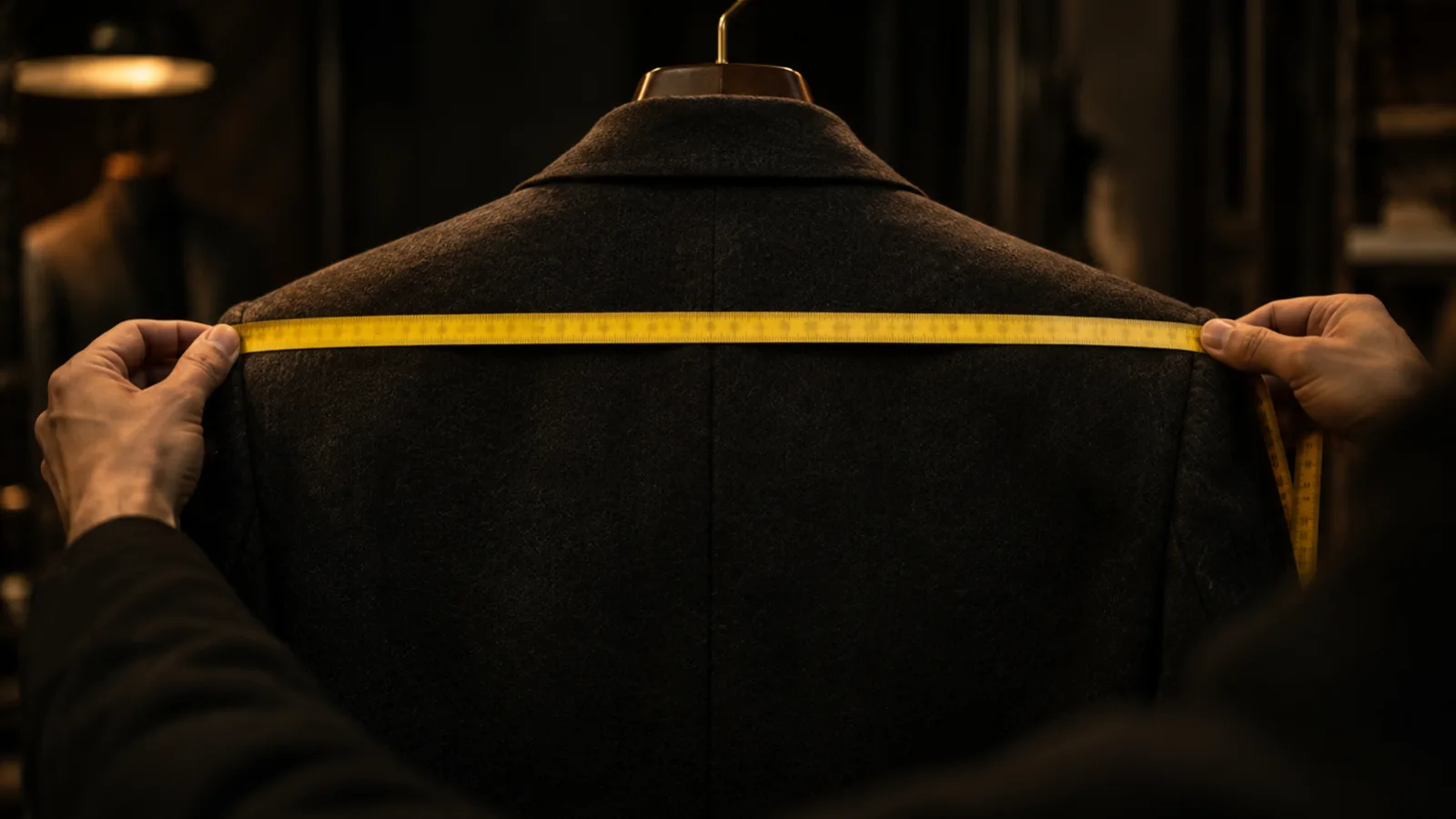
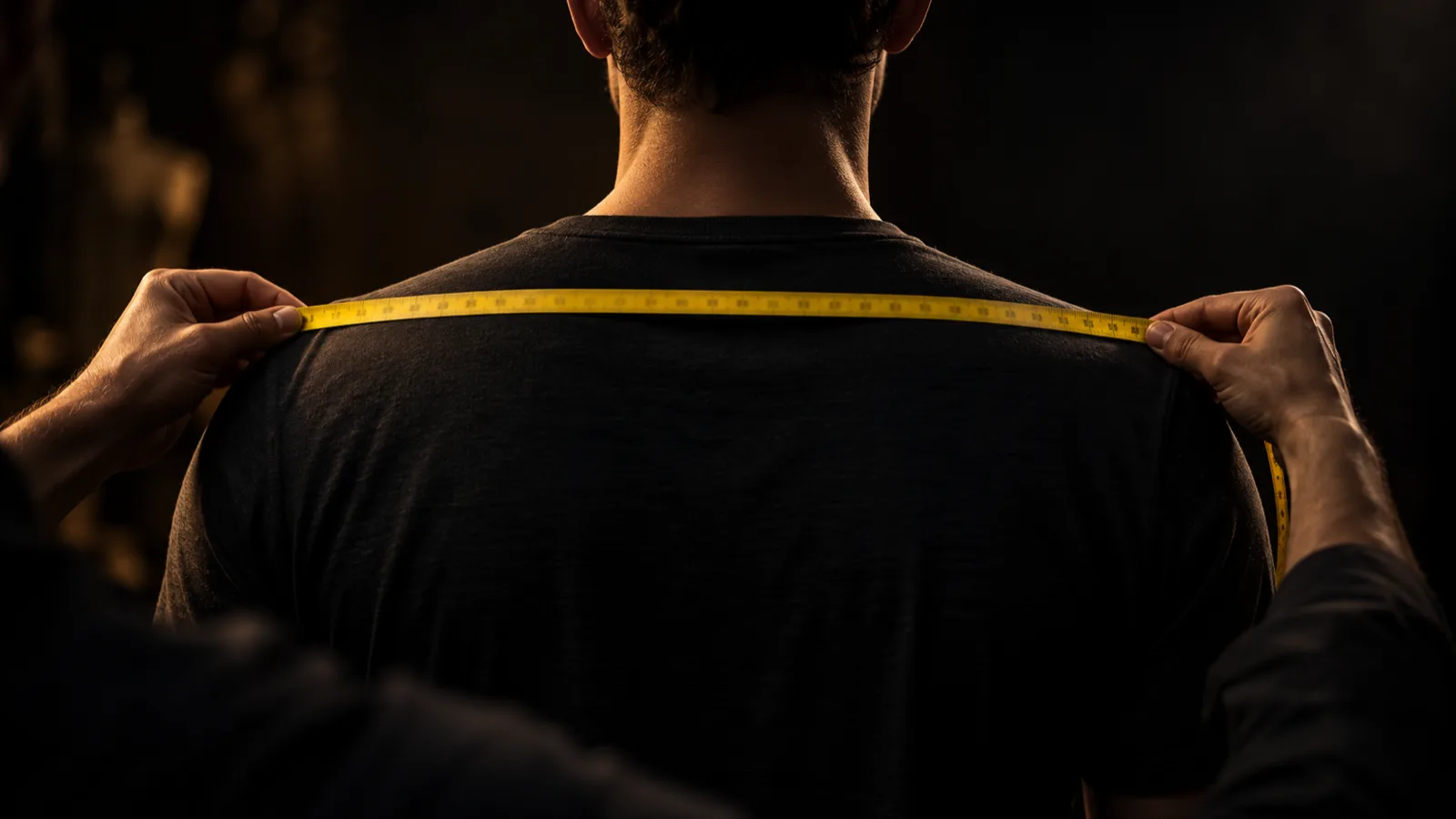
To measure shoulder width, stand relaxed with your arms at your sides and have someone run a soft tape measure straight across your upper back, from the bony tip of one shoulder to the bony tip of the other. Keep the tape level and read the number in inches. To compare with clothing, also measure a shirt or jacket that fits you well, flat on a table, from one shoulder seam to the other.
Where the shoulder point is
The shoulder point is the outer end of the bony ridge on top of your shoulder, a part of the shoulder blade called the acromion. It is where the shoulder bone ends and the arm begins. Tailors and pattern makers use it as the end point for shoulder width, and a well-fitting jacket has its shoulder seam at or just inside it.
To find it, put your fingers on top of your shoulder near the neck and slide them outward along the bone. Just before the shoulder rounds down into the arm, you feel a firm, flat bony edge. That edge is the point. If you feel soft muscle, you have gone too far. That rounded muscle is the deltoid, and measuring to it can make the reading 2 to 3 inches too wide.
Mark both points with a small piece of tape or a washable pencil before you measure. It makes the tape much easier to place, especially for a helper.
How to measure shoulder width
This measurement is hard to take on your own, because both end points are behind you. Ask someone to help if you can.
- Wear a thin shirt or no shirt. Thick fabric, collars and hoods get in the way.
- Stand naturally. Feet hip-width apart, arms hanging at your sides, looking straight ahead. Do not pull your shoulders back, puff out your chest or shrug. Any of these moves the shoulder points.
- Place the tape. Your helper holds the zero end on one shoulder point and runs the tape across the upper back to the other.
- Keep it level and flat. The tape should rest on the back without sagging or being pulled tight.
- Read it. Read the number at the second shoulder point to the nearest 1/4 inch or half centimeter. The guide on how to read a tape measure explains the fraction marks.
- Repeat. Measure two or three times. The readings should agree within about 1/4 inch. If they do not, check the marks and your posture and measure again.
Methods differ slightly on the path of the tape. Most tailoring guides run it straight across the back between the two points. Some systems, including the Japanese method, curve the tape up over the bone at the base of the neck, which reads about 0.5 to 1 cm larger. Use the method your tailor or brand asks for, and note which one you used.
Measuring a shirt or jacket that fits
For buying clothes, the shoulder width of a garment you already like is often more useful than your body measurement. It already includes the room the maker added and the style of the cut.
A shirt
- Button the shirt and lay it face down on a table.
- Smooth it flat so the back yoke and shoulder seams lie straight.
- Find the point where each sleeve is sewn to the body at the top of the shoulder.
- Measure straight across the back from one shoulder seam to the other, keeping the tape level.
If one side sits lower than the other, the shirt is not lying flat. Straighten it and measure again.
A jacket
Measure a jacket the same way, across the back from one shoulder seam to the other. Jackets have shoulder pads and a built shape, so the number is larger than your body measurement. When you try a jacket on, the shoulder seam should sit at or just short of your shoulder point. If the seam hangs past the shoulder, the jacket is too big. If it sits inside the shoulder and the sleeve pulls, it is too small.
Body measurement or garment measurement
Size charts list one or the other, and it is easy to mix them up.
- Body measurements describe you. Use your own shoulder width and compare it to the chart.
- Garment measurements describe the item laid flat. Compare them to a shirt or jacket you own and like.
The two numbers are not supposed to match. Relaxed and drop-shoulder styles put the seam well past the shoulder on purpose, so their garment width is much larger than a slim-fit dress shirt for the same person. Check the chart heading, and if the brand does not say which it is, ask.
Shoulder width alone rarely sets a size. Dress shirts are usually sized by neck and sleeve length, and jackets by chest. Shoulder width is most useful for choosing a fit, such as slim or classic, and for spotting a size that will look wrong before you buy it.
Measuring alone
If no one can help, measure a shirt that fits you instead. It is easier and more repeatable than reaching behind your back.
You can also stand with your back against a wall, place a book flat against the wall on each side so it touches the outer edge of each shoulder, step away and measure the distance between the books. This measures the widest point of the shoulders, which is usually across the deltoid muscle, so it reads wider than the bone-to-bone measurement a tailor takes. Treat it as an estimate. For more measuring tricks without the right tools, see how to measure without a tape measure.
Common mistakes
- Measuring to the muscle. The end point is the bony tip. The rounded muscle below it is too far out.
- Standing at attention. Pulling the shoulders back widens the reading. Relax.
- Letting the tape sag. A tape that droops across the back reads too long.
- Measuring over a jacket or hoodie. Fabric and seams add width.
- Comparing a body number to a garment chart. Check which kind of chart you are reading.
Shoulder width in inches and centimeters
One inch is exactly 2.54 cm. Use this table when a chart uses the other unit.
| Inches | Centimeters |
|---|---|
| 14 | 35.6 |
| 15 | 38.1 |
| 16 | 40.6 |
| 17 | 43.2 |
| 18 | 45.7 |
| 19 | 48.3 |
| 20 | 50.8 |
| 21 | 53.3 |
Many sewing tapes have centimeters printed on the back, so you can also flip the tape over and read the metric number directly. The guide to tape measure markings covers both scales.
Sources
- How to Measure Shoulder Width, Nimble Made: find the outer bony tip of the shoulder, keep shoulders natural and the tape level, and measure a shirt flat from seam to seam; seams should sit at or just shy of the acromion.
- How to Measure Shoulder Width, Nathan Tailors: measure straight across the back between the acromion points with the tape parallel to the floor; measuring to the deltoid can read 2 to 3 inches too large, repeat readings should agree within about 1/4 inch, and the Japanese method over C7 reads about 0.5 to 1 cm larger.