How to measure a window
How to measure a window for inside or outside mount blinds and for replacement windows: where to measure, which number to use, and how to round.
October 9, 2026
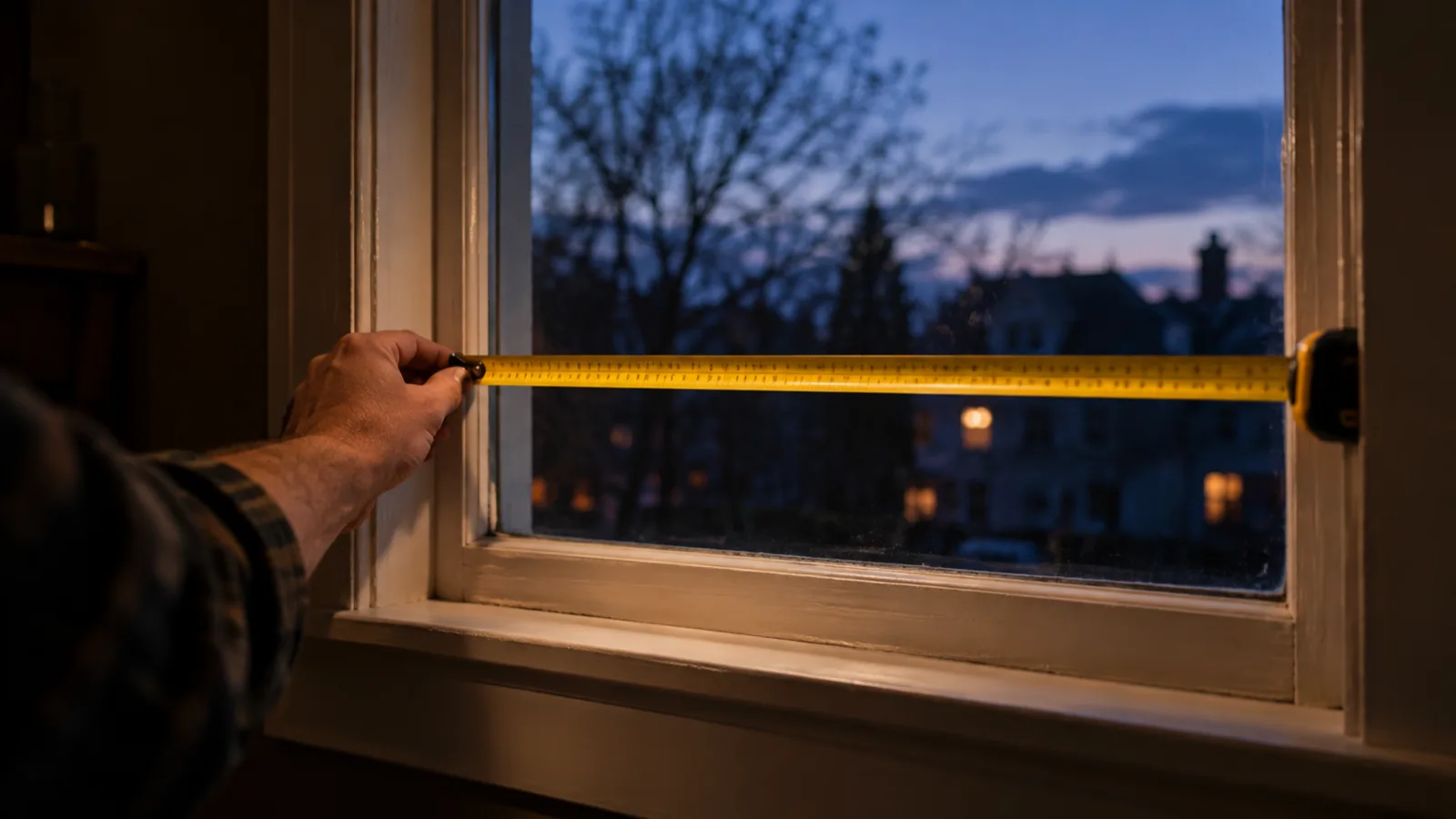
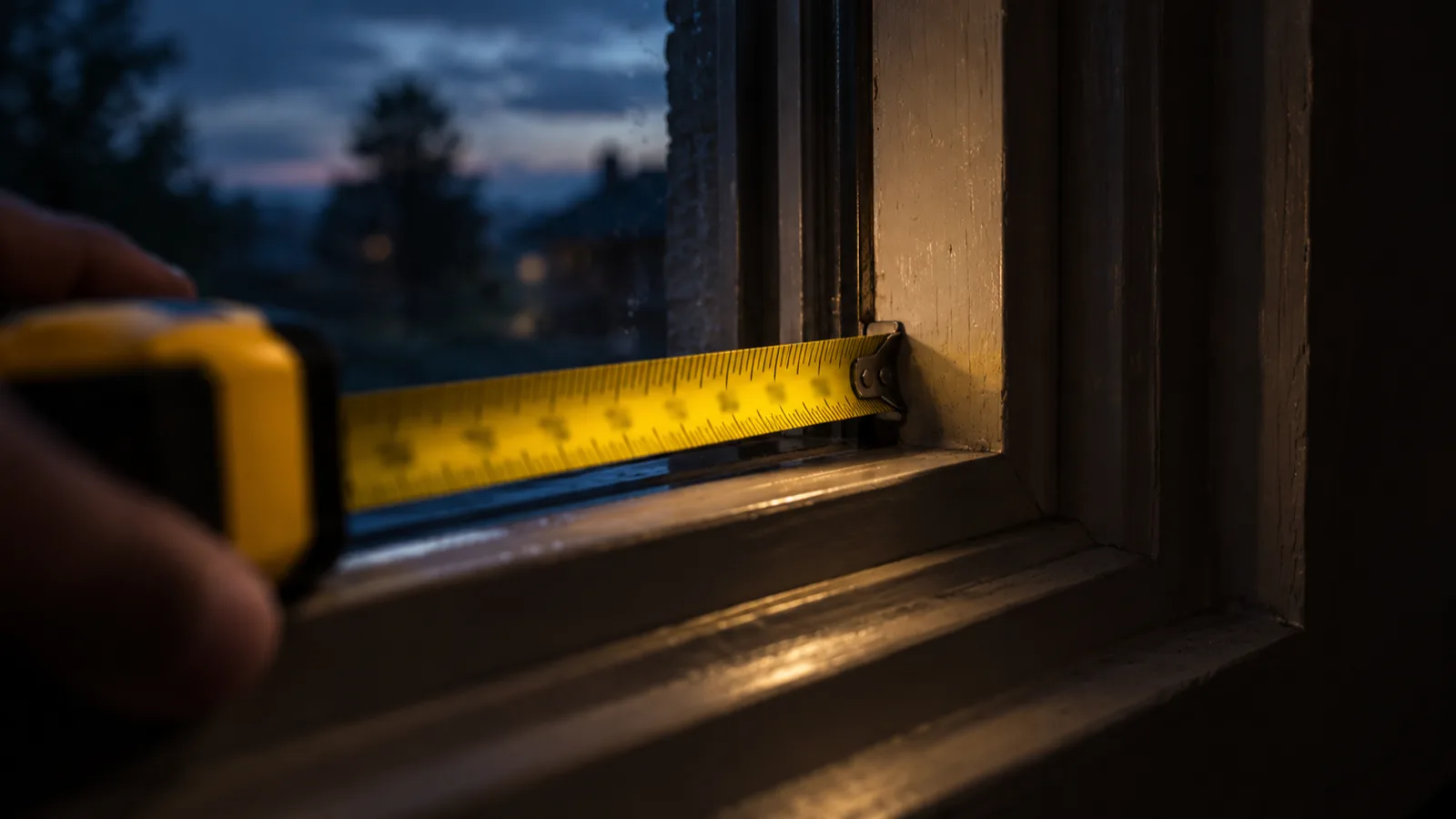
To measure a window, take the width at three points and the height at three points with a steel tape measure, and record each to the nearest 1/8 inch. Which of those numbers you order with depends on the job. Inside mount blinds and replacement windows use the narrowest width, and outside mount blinds add overlap beyond the frame. Write width first, then height, every time.
Tools and ground rules
- A steel tape measure. Cloth tapes stretch. If you need a refresher on reading eighths and sixteenths, see tape measure markings.
- Pencil and a sketch of each window, labeled by room. Windows that look identical often differ by 1/8 in or more.
- Width × height order. Blind and window companies list width first. Swapping them is the most common ordering mistake.
- Round to the nearest 1/8 in. Some order forms ask for 1/16 in, and some retailers say to round down rather than up. Follow the form for the product you are buying.
- Do not make your own deductions unless the instructions tell you to. For inside mount blinds, the factory takes a small amount off the width so the blind fits and operates. If you subtract as well, the blind ends up too narrow.
Measuring for inside mount blinds
An inside mount blind sits within the window frame, so the measurements are taken inside the opening.
Width
Measure the inside width of the frame, from one side of the opening to the other, at three points: the top, the middle and the bottom. Use the narrowest of the three. The blind has to clear the tightest point of the frame.
Height
Measure the inside height from the top of the opening down to the sill at the left, the middle and the right. For most horizontal blinds and many shades, major retailers such as Lowe’s say to record the longest of the three so the blind covers the full opening. Some guides say to use the shortest height for roller shades and vertical blinds so they do not drag on the sill. Check the measuring instructions for the exact product, because they differ.
Depth
Measure the depth of the window recess, from the front edge of the frame back to the glass or the first obstruction such as a handle or crank. Each blind lists a minimum depth for an inside mount and a larger depth for a fully recessed (flush) mount. If your recess is too shallow, the blind will stick out or will not mount at all, and an outside mount is the better choice.
Check that the frame is square
Measure diagonally from the top left corner to the bottom right, then from the top right to the bottom left. If the two numbers differ by more than about 1/4 in, the frame is out of square and an inside mount blind may leave visible gaps. Many retailers suggest an outside mount for a frame like that.
| Inside mount | Where to measure | Number to use |
|---|---|---|
| Width | Top, middle, bottom | Narrowest |
| Height | Left, middle, right | Longest for most blinds (check product) |
| Depth | Front of frame to glass or obstruction | Compare to product minimum |
| Diagonals | Both corners | Should match within about 1/4 in |
Measuring for outside mount blinds
An outside mount blind is fixed to the wall or the trim above the window and covers the whole opening. It hides an uneven frame, blocks more light at the edges and works on shallow windows.
Width
Measure the area you want to cover. Most guides say to extend beyond the opening by about 1.5 to 3 in on each side. Lowe’s uses 1 1/2 in per side; some retailers recommend 2 to 3 in per side for better privacy and light control. If the window has trim, you can measure across the outside edges of the trim instead.
Height
Measure from where the headrail will sit down to the sill, or below the sill if you want extra coverage. Leave room above the window for the brackets. Many guides add about 3 in to the height of the opening to allow for the headrail and brackets. For outside mounts the factory does not deduct anything, so the size you order is the size you get.
Check that there is enough flat surface above the window or on the trim for the brackets. Each product lists its own requirement.
Measuring for replacement windows
For a replacement (insert) window, you measure the existing frame opening, the space the new unit has to slide into.
- Width. Measure between the inside faces of the side jambs at the top, middle and bottom. Measure from jamb to jamb, ignoring stops and trim. Use the smallest number.
- Height. Measure from the highest point of the sill to the underside of the head jamb at the left, middle and right. Use the smallest number.
- Square. Measure both diagonals. Matching numbers mean the frame is square. If they differ by more than about 1/4 in, ask the installer or manufacturer before ordering. Badly out-of-square openings may need a different type of window or extra framing work.
- Depth. Measure the depth of the frame from the inside stop to the outside stop. The replacement window lists the minimum depth it needs.
Window makers use their own sizing conventions and deductions, so read the measuring guide for the brand you are buying, or have the dealer measure. For a full-frame (new construction style) replacement, the rough opening is measured after the old window comes out, which is a different process.
Curtains are a different measurement
For curtain rods and drapes, you measure the wall around the window, choose the rod height and width, and set the panel length to the floor or sill. The steps are in how to measure for curtains.
Using your phone for a quick estimate
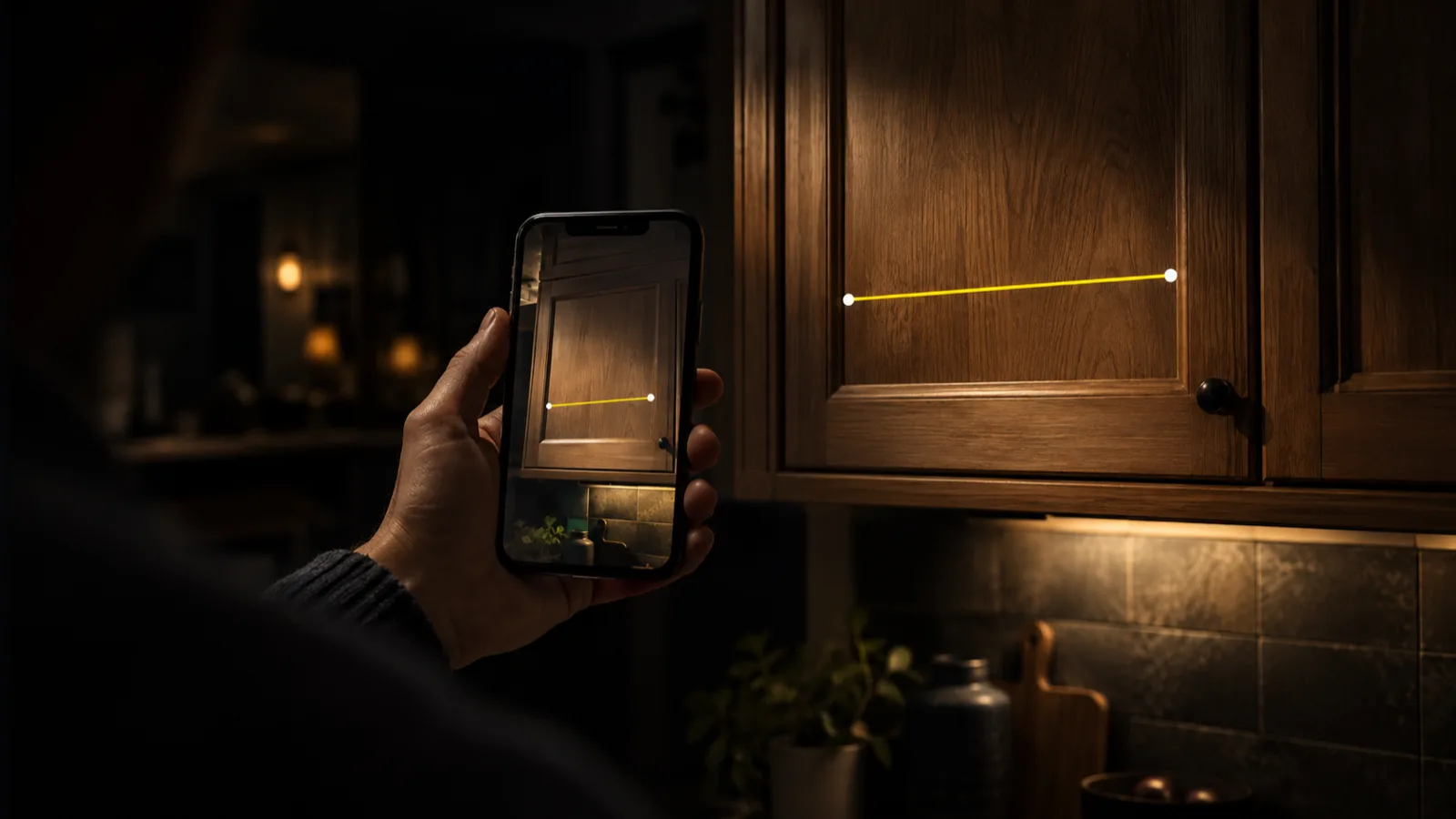
The AR Width and Height tools in Measuring Tape & AR Ruler App can give you a rough size of a window from across the room, which helps when comparing products or getting a quote. See the ruler app and height measurement app pages for how they work. AR readings are close but not exact, and the error grows with distance. Blinds and windows need 1/8 in accuracy, so take your order measurements with a steel tape. For checking that a headrail or bracket line is straight, the free level app is handy.
Sources
- How to Measure and Install Blinds, Lowe’s: inside mount width at the top, middle and bottom using the smallest, height using the largest for horizontal blinds and the smallest for vertical blinds, readings to the nearest 1/8 inch, and 1 1/2 in of overlap per side for an outside mount.
- How To Measure for Replacement Windows, This Old House: jamb-to-jamb width and sill-to-head-jamb height at three points using the smallest, and diagonals that differ by more than 1/4 inch mean the frame is out of square.
- How to Measure for Replacement Windows, Pella: measuring steps differ by window type, and a Pella professional confirms the measurements before the order is final.