How to measure diameter
How to measure diameter across the center or from circumference (d = C ÷ π), with pipe sizes, nominal vs actual OD, tree DBH at 4.5 ft and worked examples.
November 13, 2026
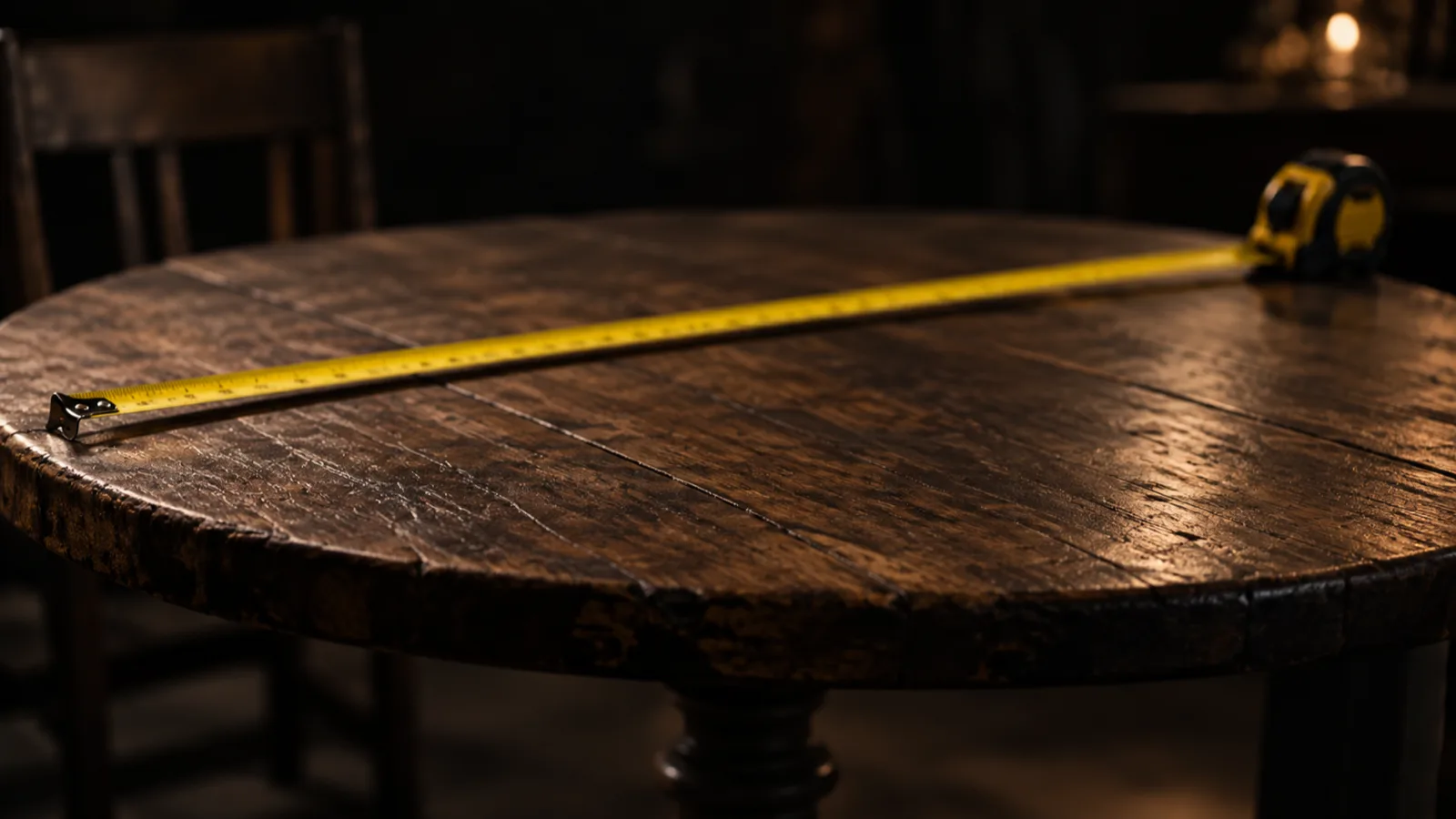
Diameter is the straight distance across a circle through its center. To measure it, hold the end of a tape on one edge and swing the other end slowly across the circle; the largest reading you get is the diameter, because the widest line across any circle passes through the center. If you cannot reach across, wrap a tape around the outside to get the circumference and divide by π (3.1416): a 31.4 in circumference means a 10 in diameter.
Measuring straight across the center
The hard part of measuring diameter is finding the center. You do not need to mark it. Use the widest-reading method instead:
- Hold the tape’s zero on one edge of the circle. On a tabletop or lid, hook the end over the edge or have someone pin it.
- Pull the tape across to the far side.
- Slowly swing the far end back and forth along the edge while watching the numbers.
- The reading rises, peaks and falls again. The peak is the diameter.
Measure a second time at a right angle to the first. Very few round things are perfectly round, so if the two readings differ, write down both or use the average. If the fractions on the blade slow you down, see tape measure markings.
For small parts such as bolts, dowels and bottle necks, a ruler laid across the end works for rough sizes, and how to read a ruler covers the 1/16 in and millimeter marks. For anything that has to fit something else, use calipers.
Inside and outside diameter
Hollow objects have two diameters.
- Outside diameter (OD) is measured across the outer surface. Close the outside jaws of a caliper on the part, or measure across the end with a tape.
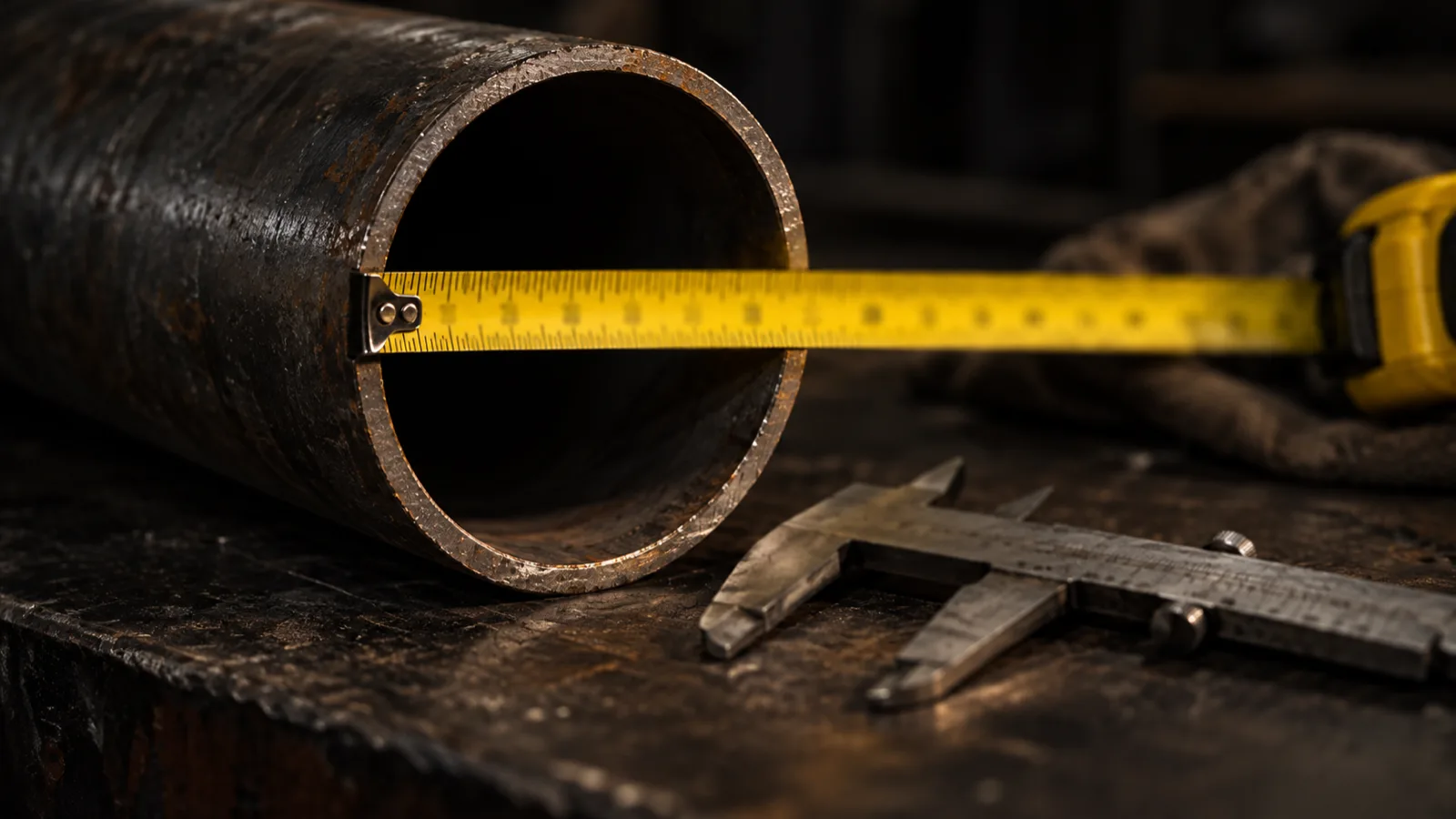
- Inside diameter (ID) is measured across the opening. Use the caliper’s smaller inside jaws, opened until they touch both walls, or hold a tape across the opening and look for the widest reading.
- Wall thickness is the difference between the two, split in half: (OD − ID) ÷ 2.
A digital caliper reads to hundredths of a millimeter or thousandths of an inch, which is far finer than a tape. Close the jaws and zero the display before each use, and keep the jaws square to the part. A tilted caliper reads too large on an OD and too small on an ID.
Diameter from circumference
When the object is too big, too round or too buried to measure across, measure around it instead and divide:
Diameter = circumference ÷ π, with π ≈ 3.1416
Wrap a soft tape, string or strip of paper around the object, keep it square to the object’s length, and pull it snug. Mark where it overlaps, then measure the length flat. The radius is half the diameter, and if you need the area of the circle, it is π × radius².
| Circumference | Diameter (in) | Diameter (cm) |
|---|---|---|
| 12 in | 3.82 | 9.7 |
| 18.85 in | 6.00 | 15.2 |
| 25 in | 7.96 | 20.2 |
| 31.42 in | 10.00 | 25.4 |
| 50 in | 15.92 | 40.4 |
| 94.25 in | 30.00 | 76.2 |
It works the same way in metric. A 100 cm circumference is 100 ÷ 3.1416 = 31.8 cm across. Going the other way, multiply the diameter by π to get the circumference, which is how you work out the length of trim to wrap a round column.
Pipes: nominal size vs actual diameter
Pipe sizes are names, not measurements. A steel pipe sold as 1 inch measures 1.315 in across the outside, and its inside depends on the wall thickness. This is why measuring a pipe and buying a fitting by that number often goes wrong.
Steel pipe in the US uses Nominal Pipe Size (NPS). Each nominal size has a fixed outside diameter. The schedule (40, 80 and so on) sets the wall thickness, so a thicker schedule keeps the same OD and shrinks the ID. From NPS 14 up, the outside diameter equals the nominal size.
| Nominal size | Actual OD (in) | Actual OD (mm) | Schedule 40 ID (in) | Circumference (in) |
|---|---|---|---|---|
| 1/2 | 0.840 | 21.3 | 0.622 | 2.64 |
| 3/4 | 1.050 | 26.7 | 0.824 | 3.30 |
| 1 | 1.315 | 33.4 | 1.049 | 4.13 |
| 1-1/4 | 1.660 | 42.2 | 1.380 | 5.22 |
| 1-1/2 | 1.900 | 48.3 | 1.610 | 5.97 |
| 2 | 2.375 | 60.3 | 2.067 | 7.46 |
| 4 | 4.500 | 114.3 | 4.026 | 14.14 |
| 6 | 6.625 | 168.3 | 6.065 | 20.81 |
To identify an unknown pipe, measure the OD with calipers, or wrap a tape around it and match the circumference column. A pipe that is 3.3 in around is 3/4 in nominal. Schedule 40 and 80 PVC pipe uses the same outside diameters as steel pipe, so the table works for those too.
Copper water tube follows a different rule. Its outside diameter is 1/8 in larger than the nominal size, so 1/2 in copper measures 5/8 in (0.625 in) across the outside.
Trees: diameter at breast height
Foresters and arborists measure a tree’s trunk at a set height so readings can be compared from tree to tree and year to year. In the United States that height is 4.5 ft (1.37 m) above the ground, called diameter at breast height or DBH. The USDA Forest Service’s i-Tree tools use 4.5 ft as the default DBH height. Many other countries use 1.3 m.
- Measure 4.5 ft up the trunk from the ground and mark it with chalk or a thumbtack. On a slope, measure from the uphill side.
- Wrap a tape around the trunk at the mark, level and snug, over the bark.
- Divide the circumference by π. A trunk 94.25 in around is 30 in DBH.
Professionals use a diameter tape. Each inch of diameter on its scale takes up π inches (about 3.14 in) of tape, so it reads the diameter directly when you wrap it around the trunk. If a fork, branch or swelling sits right at 4.5 ft, measuring rules differ between programs. Measure where the trunk is regular and write down the height you measured at.
Large round objects around the house
For a round dining table, a rug or an above-ground pool, the widest-reading method with a long tape is usually the most accurate. For a quick check, the Width tool in Measuring Tape & AR Ruler App measures across an object with your iPhone camera; see the ruler app page. Aim it straight across the middle and confirm the number with a tape before ordering a cover or a glass top. If you have no tape at all, how to measure without a tape measure lists everyday objects of known size.
Sources
- ANSI Schedule 40 Steel Pipes, Engineering ToolBox: outside diameters by nominal size (1/2 in = 0.840 in through 6 in = 6.625 in, OD equal to nominal from 14 in) and Schedule 40 inside diameters.
- Eco data explanations, i-Tree (USDA Forest Service): the default DBH height is 1.37 m (4.5 ft), and the measurement height is recorded when DBH is taken elsewhere.
- How to measure a tree, City of Portland: measure 4.5 ft up the trunk, wrap a string around it for the circumference, and divide by pi (3.14) for the diameter.